Clear vision, measurable progress and shareable intelligence help a product succeed.
See how Aida helps companies make and preserve decisions that keep projects moving and meeting targets.
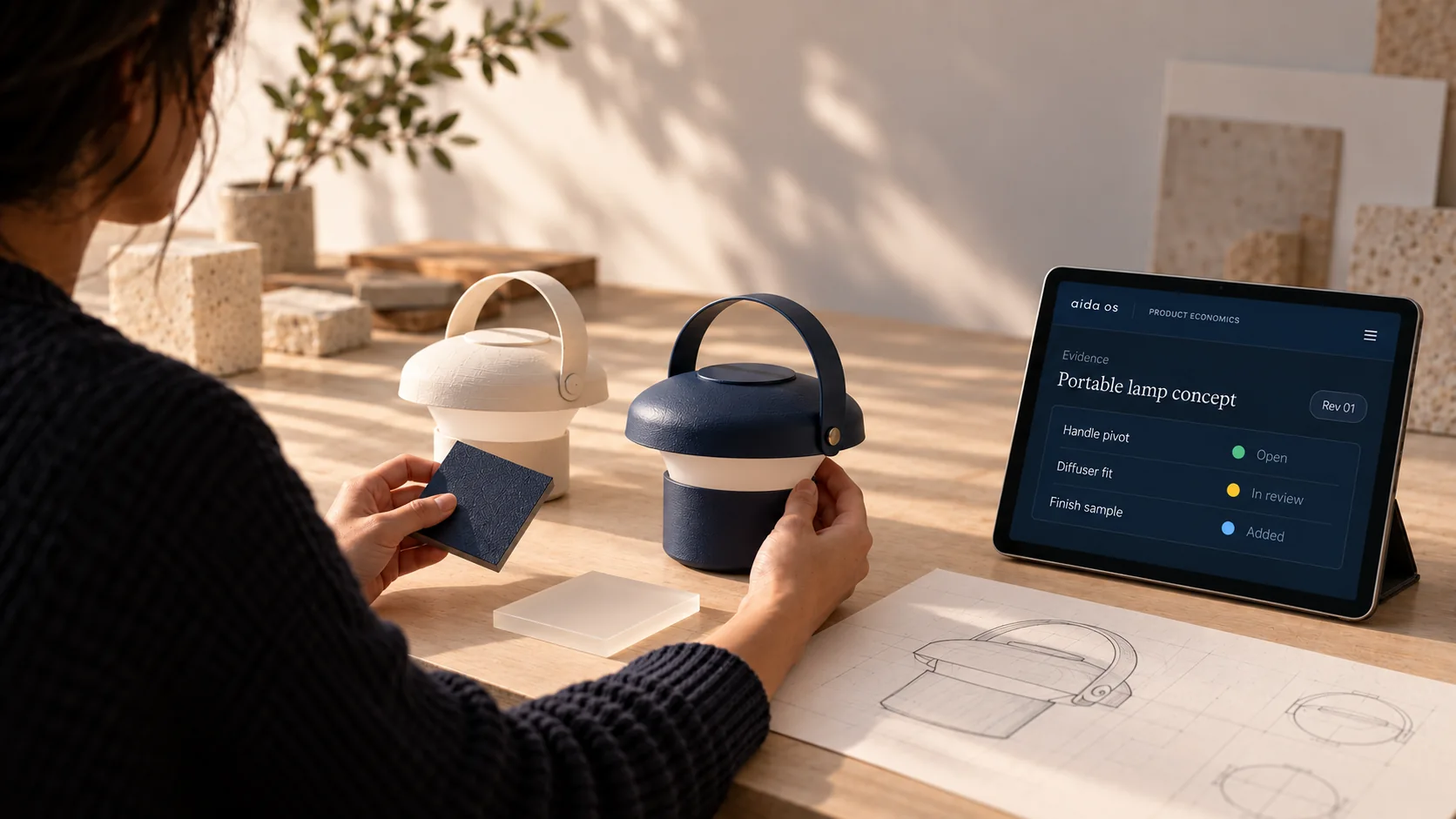
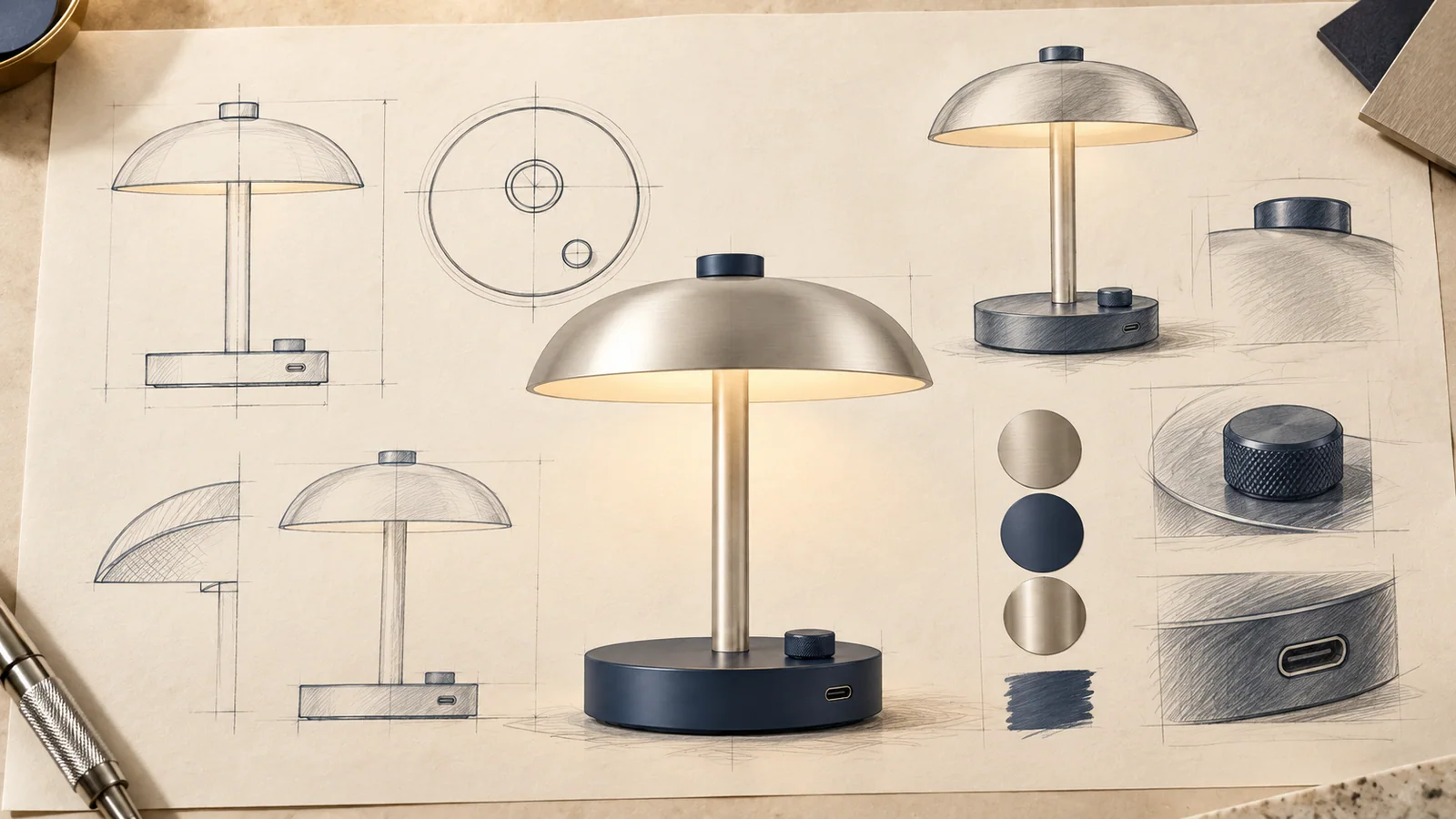
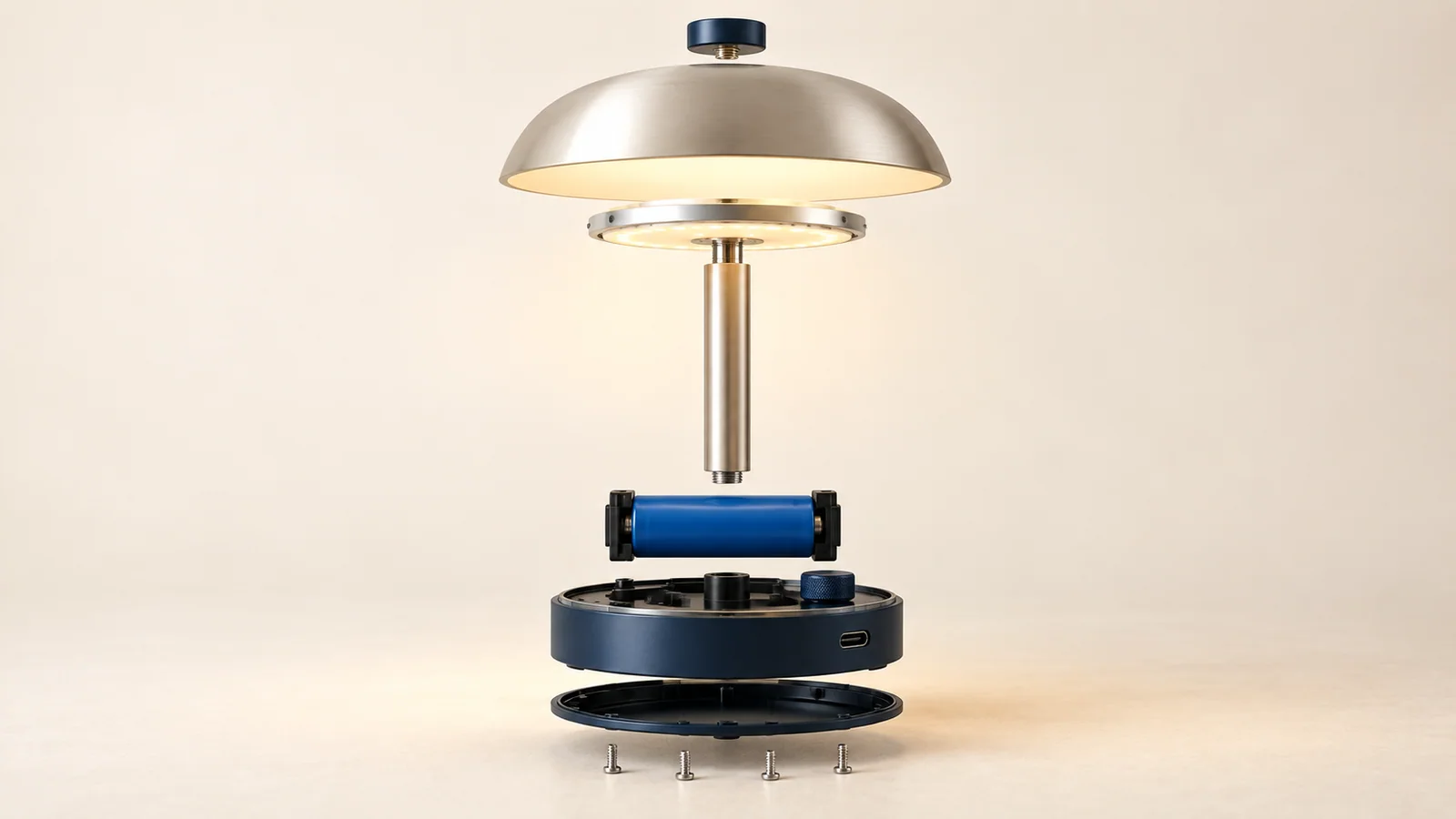
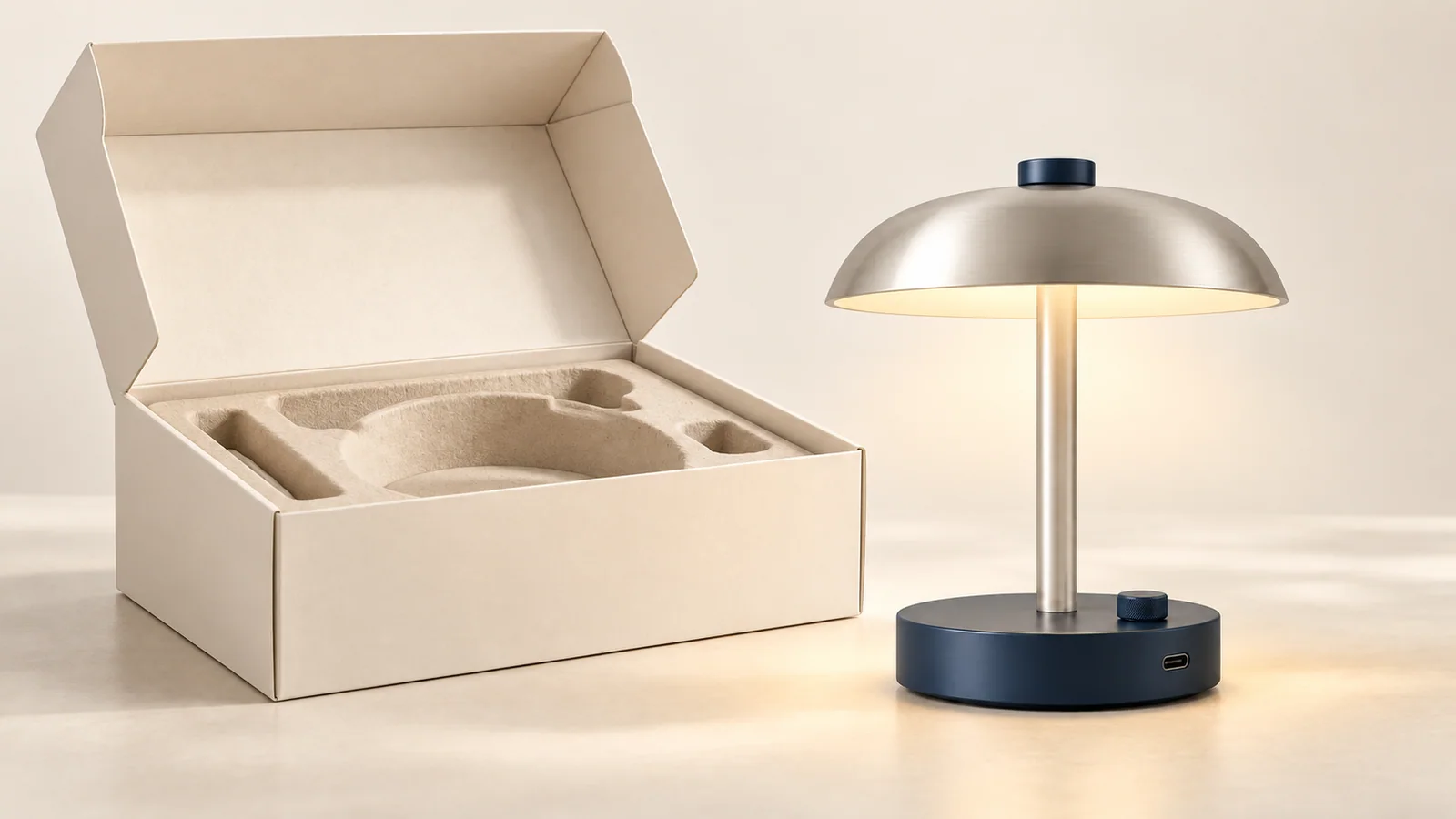
Lumen Portable Table Lamp · Illustrative scene and tablet view, not a live screenshot
Capture
Enter what you know, label what you assume.
Compare
Set your economics beside the market you are entering.
Commit
Leave with a price, a payback and a list of open questions.
Product Laboratory
Different businesses. The same clear decisions.
Find a journey that feels familiar.
These original fictional companies reflect real customer types. Their products, prices, suppliers, conversations and evidence are illustrative planning examples, not verified commercial claims.
Arclet Portable · Linework Task · Canopy Pendant
Which lighting product should reach tooling first?
Try the experiment
Compare a portable, task light and pendant. Increase a finish allowance, change the carton pack and see which launch still meets its margin target.
Make the decision
Keep the alternatives in Beta Experiments. Promote the chosen launch to an active project once its assumptions and evidence are ready.
Choose a product to update all nine examples below.
Showing Arclet Portable from Cinderline Design Studio in all nine examples. Fictional planning assumptions in USD.
01
Product and Feature Set
Economics start with a promise. Write the North Star first, then let each feature declare whether it is table stakes or the reason someone chooses you.
Name the product, set target margin and Year 1 volume, then list features with importance, status and cost impact.
TipIdentify the features customers would pay for. If none stand out, test your positioning and price assumptions before committing.
Set month-one volume, growth, upfront investment and fixed cost for each scenario.
TipLet the Expected scenario drive the ROI headline; keep Conservative visible in the same room.
Section 8 · Payback · Arclet Portable
Break-even, expected
Month 4
Year 1 gross profit
$391.3K
At calculated retail
$306.5K
09
Approval Readiness
A decision is ready when the open questions are named, owned and dated.
Work a checklist by section, attach documents, and see what is blocked at a glance.
TipBlocked is a useful status. Hiding it costs more later than saying it now.
Section 9 · Approval readiness · Arclet Portable
Runtime, battery protection and transit tests remain open.
product evidence reviewedin progress
import evidence reviewedblocked
regulatory evidence reviewedblocked
Your signed-in home
Start with Projects.
Projects brings your companies, models, conversations and evidence together. Try an idea in Beta Experiments, work through its economics, then promote it when you want it included in your active portfolio.
Overview shows the economics of your active projects. Companies organizes the businesses you work with. Conversations, Documents and Reports bring the supporting work into one place, with every discussion and attachment linked to its product.
1. Experiment privately
Start blank or use a fictional template. Save and revisit an experiment without adding it to active-project dashboard totals. Experiment and storage allowances still apply.
2. Promote deliberately
Choose Promote to active project when the model is ready. Promotion checks your saving plan and active-project allowance, and carries the model and its decision history forward.
3. Review the portfolio
Compare expected twelve-month volume, revenue, profit and investment. Archived projects and experiments stay outside active totals; different reporting currencies remain separate.
Keep questions, assumptions and outcomes in each section’s Decisions & conversations panel. Add product documents to notes, and use the hubs to return to the relevant discussion. A note records the work; it does not send someone a message.